Osteoporosis is the most common metabolic bone disease worldwide. According to World Health Organization data, the rate of osteoporotic fracture is approximately 30% among women worldwide, while the rate among men is about 20%. Most patients have no symptoms in the early stage. As bone is gradually lost, limb weakness and bone or joint pain may develop, and even a minor bump can cause a fracture. Without timely treatment, later disease may be accompanied by other complications and lead to serious consequences. This article provides a detailed discussion of drug treatment for osteoporosis.
1. Who should receive medication for osteoporosis
Postmenopausal women and men aged 50 years or older should be considered for treatment when any of the following conditions is present:
1. A hip or vertebral fracture.
2. A T-score ≤ -2.5 at the femoral neck, total hip, or lumbar spine.
3. Low bone mass, with a T-score between -1.0 and -2.5 at the femoral neck or lumbar spine.
4. A 10-year hip-fracture probability ≥ 3% or a 10-year probability of a major osteoporosis-related fracture ≥ 20%.
If a patient has recently taken medication that may harm bone, it should be stopped immediately, or preventive measures should be taken to reduce its adverse effect on bone. For example, patients receiving systemic glucocorticoid (GC) treatment experience especially marked bone loss during the first three to six months, mainly in trabecular bone. The degree of bone loss is closely related to dose and treatment duration. Lower doses may be less harmful than higher doses, but there is no absolutely safe threshold. A consensus of the Spanish Society of Rheumatology states that patients receiving more than 5 mg/day of prednisone, or an equivalent drug, for more than three months should begin prevention of glucocorticoid-induced osteoporosis (GIOP) as early as possible. Effective GIOP prevention includes using the lowest GC dose that controls the underlying disease, encouraging exercise to strengthen bone and muscle, avoiding harmful products such as tobacco and alcohol, and ensuring adequate calcium and vitamin D intake through a balanced diet.
A recent systematic review concluded that patients receiving GC treatment should receive calcium and vitamin D supplementation at the same recommended doses used for healthy children, particularly when treatment is expected to continue for more than three months. It also suggested continuing calcium, vitamin D, and other nutrients for three months after GC treatment ends, because the negative effect of hormones on bone may persist. No study has yet clearly defined the optimal duration of bisphosphonate (BP) supplementation. The article recommends using it for prevention as an effective pharmacologic intervention.
2. FDA regulations for treatment medications
According to data from the National Institutes of Health (NIH), osteoporosis is a common skeletal disease characterized by reduced bone mass and deterioration of bone structure, which can increase fracture risk. FDA-approved medications such as zoledronic acid and ibandronate have been shown to increase bone density and reduce fracture risk. The National Osteoporosis Foundation (NOF) therefore recommends considering FDA-approved medications first when preventing and treating osteoporosis.
Medications currently approved by the FDA for osteoporosis treatment include:
1. Bisphosphonates, including alendronate, ibandronate, risedronate, and zoledronic acid.
2. Estrogen-related therapies, such as ET/HT, raloxifene, and conjugated estrogen/bazedoxifene.
3. Parathyroid hormone analogues, such as teriparatide and abaloparatide.
4. RANK-ligand inhibitors, such as denosumab.
5. Sclerostin inhibitors, such as romosozumab.
6. Salmon calcitonin.
3. Anti-osteoporosis medications widely used in clinical practice
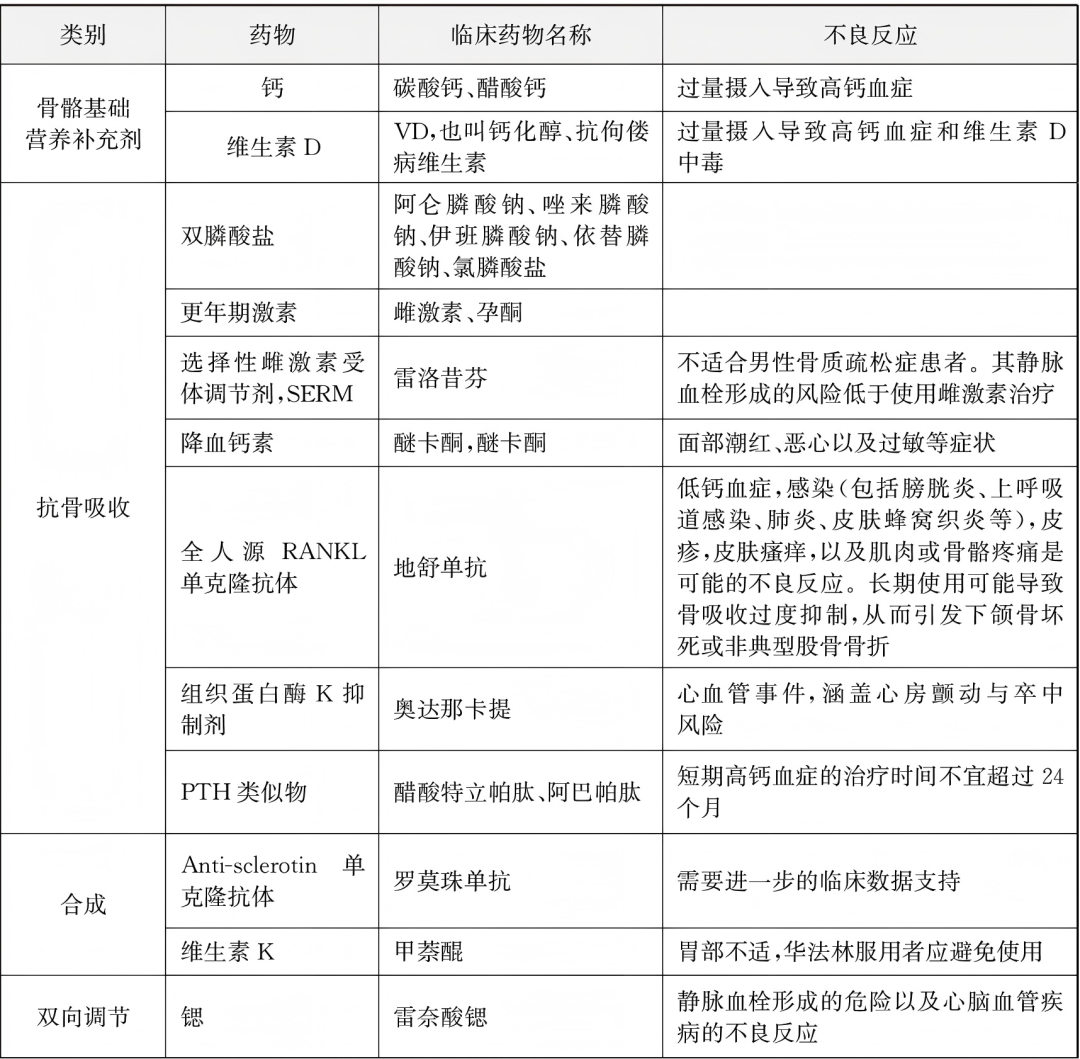
Anti-osteoporosis medications are mainly divided into two categories: antiresorptive drugs and bone-anabolic drugs (see Table 1). Antiresorptive therapies, such as bisphosphonates, denosumab, and raloxifene, target and block osteoclast activity to reduce bone resorption and loss of bone density. Anabolic therapies, such as teriparatide and abaloparatide, temporarily stimulate PTH receptors to promote osteoblast activity and bone formation.
Antiresorptive drugs are currently the main treatment choice for osteoporosis. They act on several key points in osteoclast function and effectively suppress osteoclast activity, thereby reducing bone resorption. Major examples include bisphosphonates, estrogens, calcitonin, cathepsin K inhibitors, and RANKL inhibitors. In contrast, relatively few osteoporosis medicines that promote bone formation are available on the market.